
Podcast
Taking the Mystery Out of Being a Clinician Defendant
May 10, 2026

“For a claims management program, if your defendant isn’t able to perform at the highest level possible for him or her, that’s going to hurt your case more than a great expert is going to help it.”
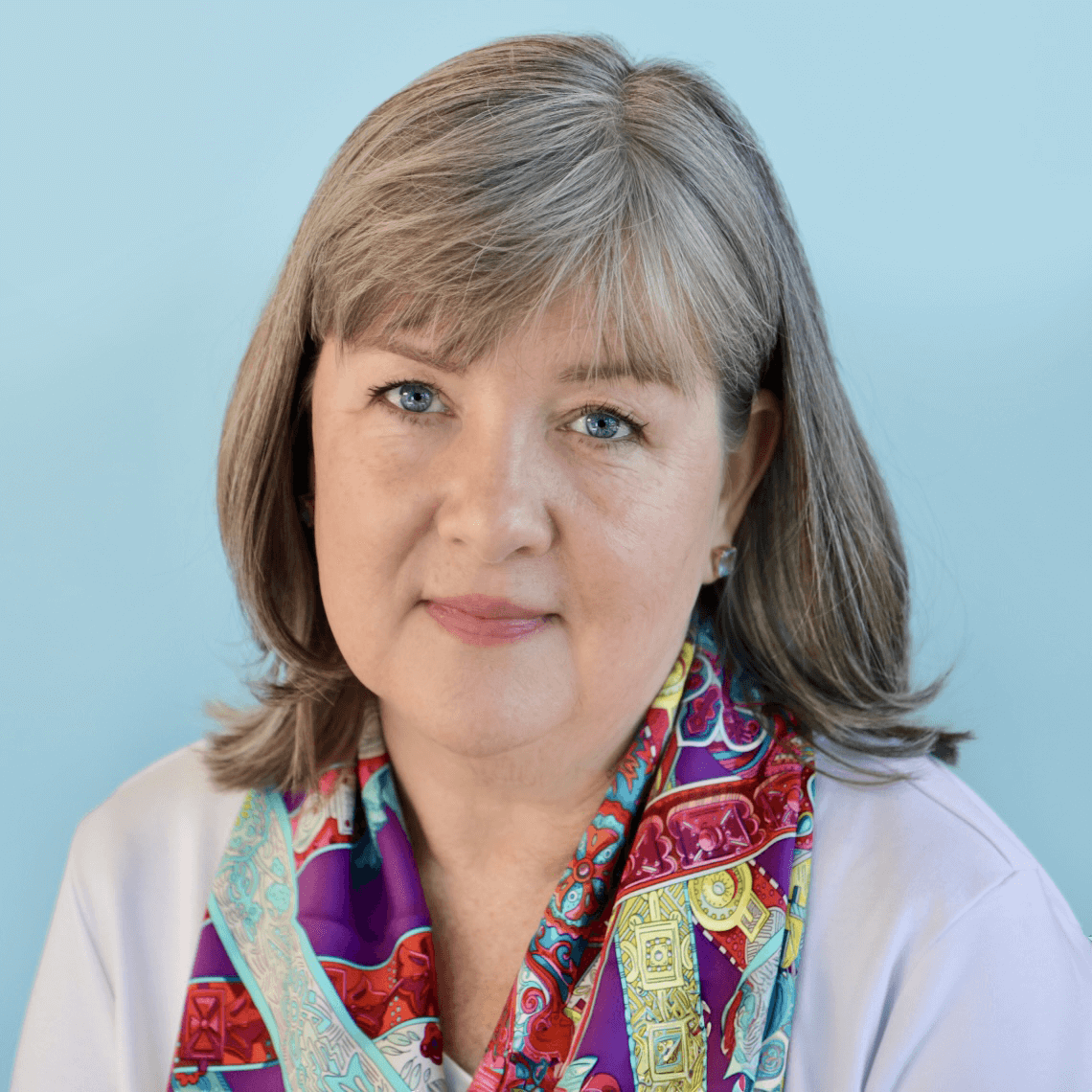
Elizabeth Cushing, JD
Senior VP, Claims, CRICO
Welcome to Safety Net, a patient safety podcast with news, trends and ideas from CRICO, the insurance program for all of the Harvard medical institutions and their affiliates, bringing a data driven approach to reducing medical error through clinical analysis of malpractice claims.
Thank you for joining us. I’m Tom Augello, and our guests today on Safety Net are two leaders in patient safety and medical malpractice defense. Dr. Gita Pensa is a physician and a leading expert in litigation stress management, and a sought after performance coach for defendants. We’re also joined by Beth Cushing, an attorney and Senior Vice President for Claims at CRICO, defending the Harvard medical community and its providers when they’re sued. CRICO has partnered with Dr. Pensa to offer defendants an online, self-paced course on litigation, education and performance known as LEAP.
Thank you both for joining us.
Dr. Gita Pensa: Thank you, Tom
Beth Cushing: A pleasure to be here.
CRICO: Gita, you have been coaching physician defendants for years. You have your own backstory as a physician defendant. From your side, how did this initiative with the Harvard medical institutions begin with CRICO?
Dr. Pensa: Well, I I’m trying to think back. I think it started when I was invited to speak, at a program that CRICO was sponsoring, or Law Day. And after that, I became involved in quite a number of cases that CRICO had ongoing, in terms of helping with their defendants, coaching their clients, getting them ready for testifying at deposition or trial.
And I have this idea about, you know, I have these grand aspirations to really educate all the doctors, all the clinicians out there about the realities of litigation and how to, acclimate and then perform in that environment. And Beth and Carl Kallenberg at CRICO were kind enough to allow me to try.
First we were doing group coaching and then, I had a I don’t remember Beth, like 18, 20?
Cushing: Yeah, a couple of cohorts, right?
Dr. Pensa: Yeah, we did a few, a couple of cohorts of between 15 and 20 defendants in litigation and I was sort of taking them through a lot of what I do in my one-on-one coaching. And as often as is the case with doctors, a lot of people couldn’t make it at a particular time. And it’s just sort of herding cats. And I wasn’t recording those sessions for obvious reasons. So I started making these little videos, for them to just watch each week. If they couldn’t come. And then they started saying, could we just have the videos? Like, I just know, like, this is this is great. This is completely adequate. Like, could you do something around that?
And that is how defense Litigation Education and Performance, as you called it, or sorry, as it’s called, that’s how that came to life.
CRICO: Great. Beth?
Cushing: Yeah, well, first of all, when Gita came to Law Day, let me tell you, it was a big eye opener. We had 200 lawyers in the room, and to a person they said how meaningful it was for them to be reminded of the difficulty that their clients are having in this experience. And I think they have been more sensitive to it ever since then. I mean, first of all, she speaks about her own experience, which is so compelling and meaningful, to someone going through the experience. It’s always good to see someone else who’s gone through this and can relate and came through it whole. And that’s the goal that we have for everyone, right? That this not derail their career or their life, in a way that cannot be hopefully repaired.
CRICO: And so you had, a pilot phase and then you learned some things and calibrated; what did that look like?
Cushing: Following the in-person coaching that Gita was doing, we did a survey of how did people feel about their ability to defend themselves before and after the program. And the results were startling. I mean, they went from feeling, this is such a mysterious process, and I’m not sure what my role is, to I feel very confident that I can actively participate in this defense. So we knew that this was more than just a feel good, you know, we care about you, and if you need someone to talk to, we’re here. Which we’ve always done. This felt more meaningful. Like, I’m empowered. And, I think that really grabbed all of us as something that we needed to really put some muscle into, because it was going to benefit everyone. Again, help us figure out if this case can be defended, help the doctor defend themselves and get through the experience.
Dr. Pensa: Really, I think what we learned is that a lot of the principles could be transmitted by just a static video. I myself had believed that in-person, face-to-face coaching was totally necessary. So it was eye opening for me to find out that maybe it wasn’t, in all the cases.
CRICO: Let’s talk a little bit about what’s in it. What’s the content look like? What are they going to see?
Dr. Pensa: So we have two parallel goals in litigation as a physician or a clinician in litigation. And my goals for them, one is for them to really contend with the emotional difficulties that arise out of litigation and potentially whatever the adverse event was.
We all have our own, emotional relationship to whatever the events were. And we may feel a lot of grief around that. We may be suffering a lot around that. And then when you add litigation on top of it, then there is a real psychological burden, as Beth was talking about before.
The other assignment that we have, though, is to learn how to be a meaningful member of our defense team. And we don’t know anything about that in medicine. We have no clue. We come in with a lot of thoughts about what it should be like, what we feel like it should be, and then when we find out that that is actually pretty misaligned with the way things actually work. Then it feels like multiple punches to the nose, basically. I mean, just over and over, and then the hits will keep coming if you don’t understand what to expect. And so, curriculum-wise, we spend a lot of time on the origins of litigation, stress, how we think about it, adapting, the psychology around, the shame around litigation and that sort of thing, along with here is how it actually works. This is the ecosystem. This is how the money moves around. This is your role as a defender. But this is a group project. Who are all the other people that are responsible for your defense, and how do you interact with them and what can you control and what can you not control? And all of those things I think are one of the participants describes it as feeling like someone gave them a map instead of just having just driving around in circles and circles and circles.
And that’s really kind of that’s really what I’ve designed it to do. It’s very informal. I’m, you know, I sit in this chair sometimes with slides, it’s basically like a doctor to, doctor or other clinician conversation, but really telling it from the perspective of someone who remembers what it was like to feel like them and then chart like, okay, these are the steps that I took to over like a decade, really to figure this out on my own. And I want to condense that for you.
CRICO: Do you think there’s something about having this on demand and in the privacy of their home, they can, if they’re having a panic attack in the middle of the night kind of see something on their time?
Cushing: I think so, and we’re really just at the beginning of rolling this out. And we continue to remind them that this resource is there, but we’re finding that people are seeking it out. So that’s terrific. And sometimes going back multiple times, so they may be taking it in bits and pieces. It’s a lot of material and it sort of follows along the litigation process. So some people might be just doing it as their case is evolving or they’re going ahead so they can kind of see where this is headed. It really doesn’t matter to us, because it’s all useful information to help them feel, again, like this shouldn’t be a mystery. They should know and be able to understand and expect what’s coming and be prepared for it.
Dr. Pensa: Tom, I know that one of the things that I found so frustrating in group coaching and I still I find it frustrating, is that you have to meet people where they are. And this is a process that’s so infused with shame and just feelings of not wanting people to know that they’re involved in it, even though it is so common. But with group coaching, I do everything virtually. It was really hard to get people to show their faces on camera, or to unmute and talk and participate and, I do think for the same reason that, you know, I have a podcast, people have reached out and said, like, “I really like listening to this podcast because I could do it in my car. I feel like I have to cry or whatever, that I could do that, and I don’t know when he has to know about it.” I think similarly with the with the course, which is, again, it was a surprise for me. So we’re just sort of adapting and evolving.
CRICO: Well, Gita, you didn’t have that. I mean, I think you know, exactly what happens when that’s not available, which I think is still widely not available.
Dr. Pensa: Yeah. No, you’re right. You’re absolutely right. It’s not widely available. A lot of the work that I do is, trying to get institutions to recognize that we need better systems of support in education on both fronts. And I think that that’s a win-win scenario, I really do.
I think that certainly it will also help the clinicians. But we’re also in this new time in medical litigation and feels more predatory than ever. And I do think that a better supported and prepared defendant is going to make a better witness and is going to help lead us to better legal outcomes. And so there are ways that we need to think more broadly.
You know, I come at it thinking like a doctor and thinking about a public health approach where certainly it matters, my one on one care of a patient matters greatly. But we also have to think about the whole population and what kind of, you know, scalable, actionable changes can we make involving all the stakeholders in order to effect great change at a population level?
That’s kind of how I think about this. And this is an effort of thinking how do we make something that’s affordable and scalable, that gives everybody the education and support that they deserve, and then, sure, if there are people that need additional help beyond that, absolutely. But everybody, even in lower stakes, lower value cases, everybody who’s going through this is affected emotionally by it somehow. And they all deserve some aspect of supportive education. And this is our answer to that.
And so Claims is sort of gently suggesting that, “this is something that will help you, it will help you, just give it, you know, 20 minutes a night or whatever, whatever it takes. But just let me take you from concept to concept, video to video and you will start to feel differently about this. You will start to understand your place in this ecosystem a lot better. And that is ultimately going to help you be healthier and to report better.
Cushing: And Tom, I would also add, and this is of course, critically important, the insurance companies, of course, are always looking at expenses. This is an expense that I think you cannot afford to take off. Because what you get back from a defendant who can perform well, is a better outcome, whether it’s the ability to defend the case or a settlement that’s more reasonable. Because your defendant was able to present better at a deposition, you know, at or, or at trial.
So there’s a real, economic value in, in claims management to, you know, there’s a great ROI, I would say, on engaging someone like Gita and being able to scale her program, by the way, in the way that we have, is incredibly economical compared to having her personally have to meet with people.
So, I just think insurance companies need to think about this aspect of claims management more and put more resources into it, because, as Gita said, we’re in a very predatory time right now where the effort is to really shake the physicians involved, and get them demanding settlement or not wanting to participate and performing poorly. And that’s a recipe for, difficult resolutions, which we’re trying to avoid.
So I would say, you know, for a claims management program, in addition, even more than having great experts, which, you know, there’s a lot of good experts out there. If your defendant isn’t able to perform at the highest level possible for him or her, that’s going to hurt your case more than a great expert is going to help it.
CRICO: And it benefits patients, future patients.
Cushing: Yeah. Oh, absolutely.
Dr. Pensa: Yeah. You know, before when I said that I was trying to think about this as, like, a public health solution or a public health approach, we have to start thinking more broadly about how do we turn this ship, from the direction that it’s headed in, which I think thinking as a doctor now is really impacting access to care in a lot of places. It’s impacting the longevity of physicians in a career. This kind of environment is absolutely leading to career abandonment. A lot of people are thinking ‘how fast can I retire?’ Because they look at this landscape and think, ‘I have no idea how to contend with this.’
And so I don’t really mean to exaggerate by saying that it is a public health problem. I was kind of using that as an analogy, but it actually is a public health problem. Because when you look at states where, you know, certain things are running rampant, like you just don’t have any doctors anymore, like it’s really hard. To get care. And that is a public health problem.
So, you know, I think that we start again, we start where we are and look around and think, how can I impact this entire ginormous situation? I can’t fix everything at once, but I can, I think, help doctors feel less alone and more equipped, to deal with the challenge in front of them. We’re smart people. If we learn how to get out of our own way and we have some tools, we’ll rise to the occasion.
CRICO: Sounds good. Thank you both for joining the podcast today and sharing these great ideas.
And thank you for helping providers get through, and even thrive through, I guess a very, maybe one of the worst times in their careers. Doctor Gita Pensa is an emergency physician and leading expert in litigation, stress management, and a sought-after performance coach for defendants. Beth Cushing is an attorney and Senior Vice President for Claims at CRICO.
I’m Tom Augello for Safety Net.




Gain knowledge and confidence
One resource available to defendants on this site for insured physicians is a course designed by litigation stress management expert Gita Pensa. LEAP (Litigation, Education and Performance), is now available as part of your CRICO coverage.
About the Series
We’ve got you.
Our Safety Net podcast features clinical and patient safety leaders from Harvard and around the world, bringing you the knowledge you need for safer patient care.
Episodes
Getting Control of AI in Healthcare

Safe Births are a Team Effort

Defending Providers is Different Today, Says Legal Expert After 45 Years

How Application Forms and Burnout Threaten MD Mental Health and Patient Safety