Newsletter
Cancer Prevention Awareness and the Reality of Diagnostic Risk
Feb 09, 2026
February’s focus on Cancer Prevention Awareness Month is a reminder that many cancers do not simply emerge without warning. They develop over time, often presenting early opportunities for risk reduction, screening, or timely diagnosis. For clinicians, risk managers, and insurers, that reality intersects directly with one of the most persistent sources of claims in ambulatory care: missed or delayed cancer diagnoses.
Drawing from Candello’s national database of medical professional liability (MPL) claims, an analysis reviewed 6,544 general medicine cases closed between 2014 and 2023. In this dataset, general medicine includes family and internal medicine specialties—clinicians who account for roughly one-quarter of actively practicing U.S. physicians and who are often the first point of contact for patients with new or evolving symptoms.
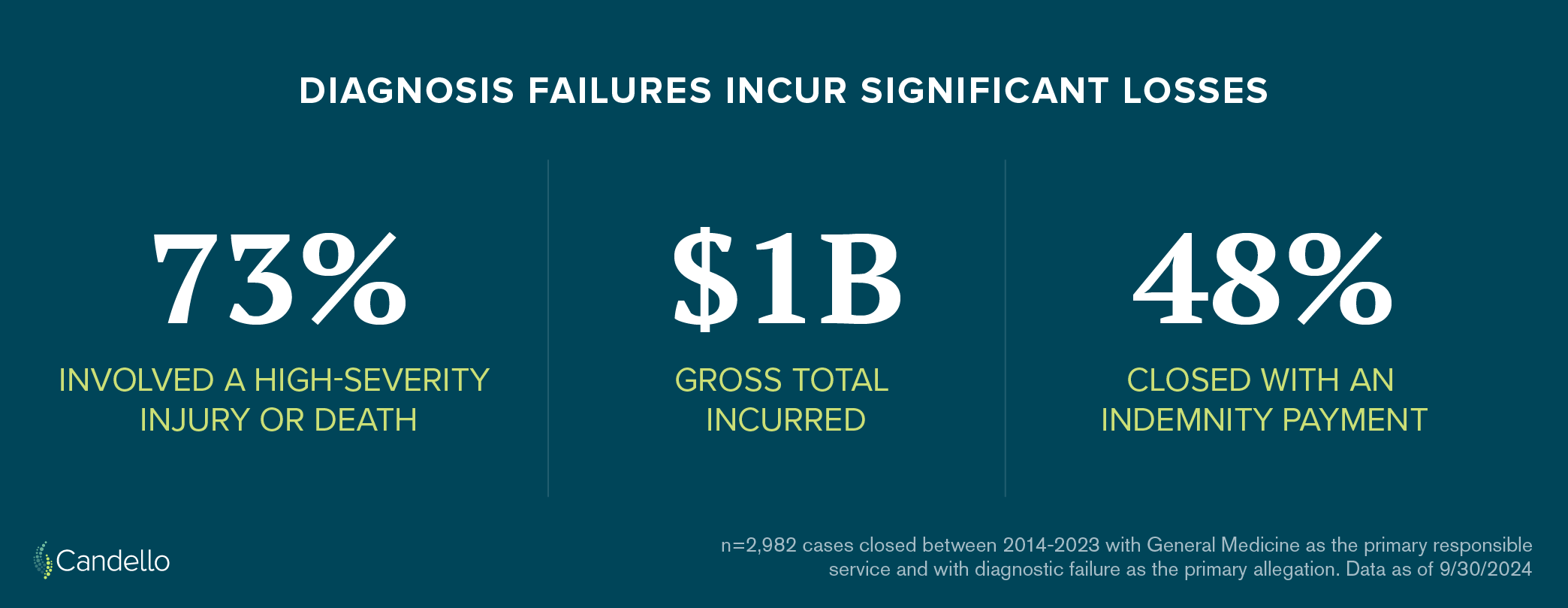
Diagnostic failures were identified as the major allegation in 46% of these cases, many of which involved high-severity injury or death. Neoplasms, including tumors later identified as cancer, were the most frequently cited diagnoses.
Where Systems Break Down
Diagnostic error cases rarely hinge on a single catastrophic misstep. More often, they involve a chain of smaller breakdowns, including:
- Delays in ordering or performing appropriate tests
- Failure to recognize evolving red flags
- Missed referral or consultation opportunities
- Incomplete follow-up of abnormal results
- Communication gaps within care teams
Each of these points represents an opportunity for the prevention of harm.
From Risk Data to Practical Prevention
Several strategies and systems are particularly relevant during Cancer Prevention Awareness Month.
Ambulatory safety nets have become an innovative, effective cancer prevention system. Structured processes for tracking abnormal laboratory, imaging, and pathology results help ensure findings are reviewed, communicated, and acted upon. Closed-loop systems with clear accountability reduce the likelihood that critical information is lost in high-volume outpatient environments.
Clinical decision support systems (CDSS) can strengthen early detection by prompting age-appropriate screening and highlighting symptom-based red flags. When thoughtfully integrated into workflow, CDSS tools reduce reliance on memory alone and support diagnostic consistency under time pressure.
Equally important is patient and family education and engagement as a diagnostic risk strategy. Communication breakdowns and follow-up failures are central themes in delayed cancer claims. Patients and families are often the only constant across the diagnostic journey, and structured education can add a critical layer of protection.
A February Reminder with Year-Round Value
Cancer Prevention Awareness Month provides a timely prompt for organizations to ask:
- Are abnormal results consistently tracked?
- Do systems reliably support timely follow-up and referral for closed-loop communication?
- Are screening opportunities being missed because workflows are fragmented?
- Are clinicians supported with tools that reduce diagnostic blind spots?
MPL data should not be viewed solely as a retrospective measure of past events; valuable claims information also functions as a source of patient safety insight to help organizations identify potential vulnerabilities, strengthen early detection processes, and support efforts to reduce harm.
And in the context of cancer prevention, fewer missed diagnoses can mean something far more important than fewer claims: better outcomes for patients when time matters most.
Related Resources
Core Elements of Hospital Diagnostic Excellence (DxEx) | Patient Safety | CDC
Leveraging MPL Data to Target Risk in General Medicine Services
Toolkit for Engaging Patients to Improve Diagnostic Safety. | PSNet
Recent Issues
Surgical Malpractice: Fewer Cases, Higher Stakes
General Medicine: Diagnostic Risk Across the Continuum of Care
Obstetrics Claims: Higher Severity, Higher Stakes