Download the PDF Free of Charge
The HaH model brings many benefits. This pdf outlines safety considerations that are distinct from the traditional brick-and-mortar acute care settings.
PDF
Newsletter
Feb 03, 2026
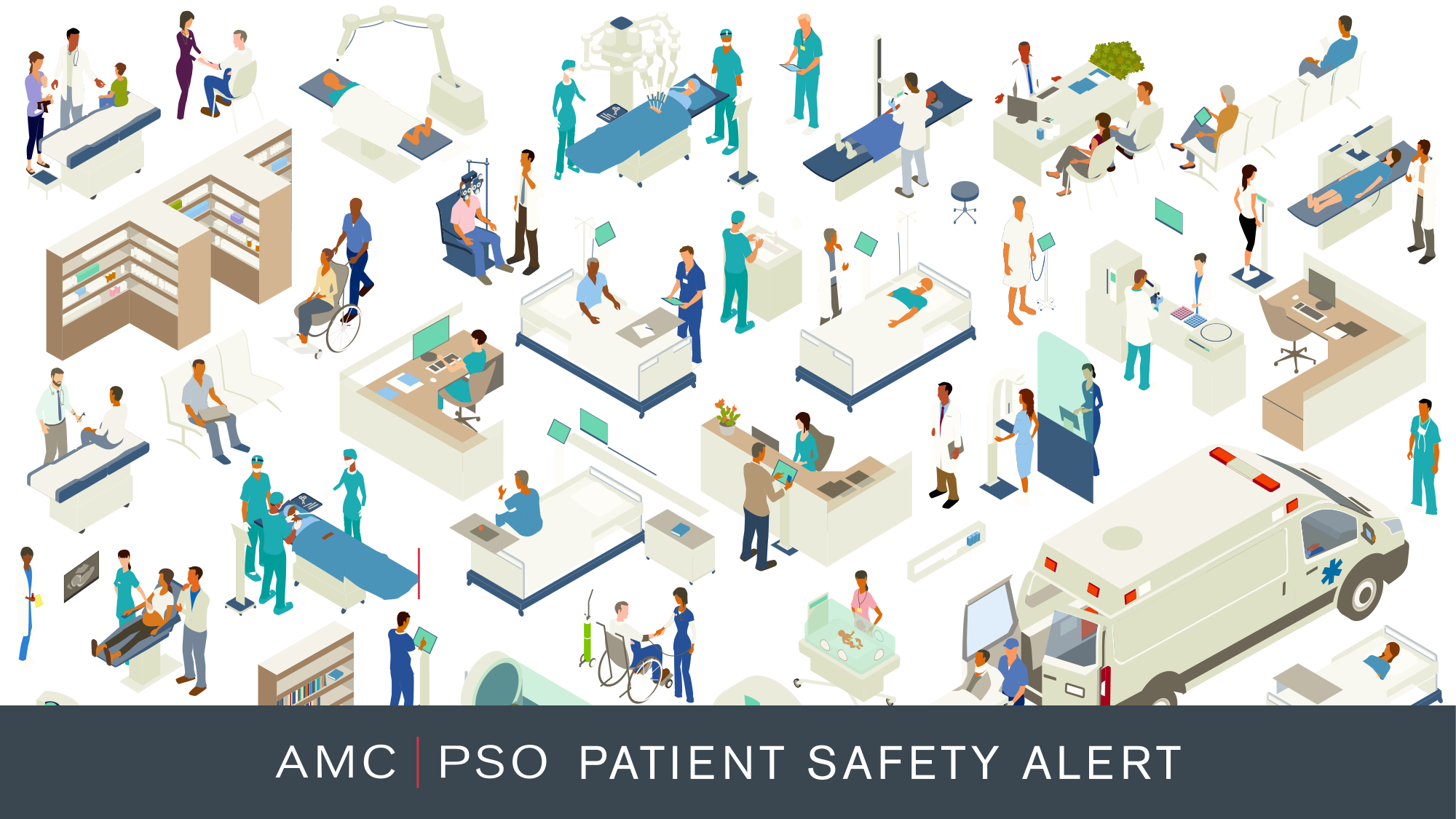
Hospital-level care provided in the home represents a growing area of health care. Hospital at Home (HaH) models provide acute hospital-level care in a patient’s home, reducing hospitalizations and unnecessary complications.1 While there are many benefits to the HaH model, there are also safety considerations that are distinct from the traditional brick-and-mortar acute care settings.
The Academic Medical Center Patient Safety Organization (AMC PSO) regularly convenes subject matter experts to discuss existing and emerging risks to safety around different topics. The goal of these convenings is to reach consensus on how to achieve high-quality, safe care in the topic area of focus.
HaH care has shown to be an effective and efficient way to treat older adults,2 and has several benefits compared to care provided during an inpatient hospital stay, including decreased rates of mortality, reduced discharges to skilled nursing facilities, and fewer readmissions.3 Overall, patients report positive care experiences and physical activity by being cared for in the home setting.
However, HaH is not without risks and challenges to patients and their caregivers. Potential issues include unrecognized hazards in the physical environment, stressors to both those receiving and providing care, and complexities related to social support networks and functional needs, such as activities of daily living.1 These risks are compounded by physician concerns, patient resistance to home care, and reimbursement challenges from payors.1 The landscape of safety events and issues with HaH is evolving and needs to be monitored.4,5
The AMC PSO assembled a Task Force comprised of HaH physician, nurse, pharmacy, and operations leaders. The Task Force convened four times from December 2024 to May 2025 to discuss safety themes around HaH, and any gaps in literature or best practices that they felt should be addressed. Task Force members represented HaH programs at various stages of development, ranging from six months post-implementation to more than ten years of experience providing hospital-level care at home.
Discussions and a group survey revealed three buckets of potential risk for evaluation:
This document summarizes each of these areas of potential risk and corresponding mitigation strategies identified by the Task Force.
Vendors supply all equipment needed to care for a patient in their home. Because they are a separate entity from the hospital, there are issues with oversight, quality, and availability.
RISKS |
|
MITIGATION STRATEGIES |
|
Programs identify appropriate patients for whom they can safely provide HaH care.
RISKS |
NOTE: |
MITIGATION STRATEGIES |
EARLY STAGESProgrammatic Fundamentals:
Delivery of Clinical Care:
Equitable Care:
Safety & Emergency Planning:
Expansion Considerations
|
Medication safety has clear processes within a hospital, and transferring these to a HaH setting has unique challenges.
RISKS |
ORDERING:
ADMINISTERING:
STORING:
CONTROLLED SUBSTANCES (dispensing, securing, and documenting):
|
MITIGATION STRATEGIES |
ORDERING:
ADMINISTERING:
Self-administration screening
Personal Protective Equipment:
STORING:
CONTROLLED SUBSTANCES
|
HaH represents an emerging area of patient care with evolving risks and benefits for patients and providers. Whether implementing or expanding a HaH program, consideration should be given to programmatic resources, goals, and the patient population to identify and mitigate risks and deliver safe, high-quality care.
The goal of the AMC PSO HaH Task Force was to discuss these shared concerns as well as any existing and emerging best practices. While this document provides a summary of these conversations, any takeaways are meant to be used in accordance with organizational goals and state and federal regulatory requirements.
Task Force MembersKatherine S. DeSantis, Pharm D, MSMass General Brigham Stephen Dorner, MD, MPH Mass General Brigham Robert Graham, MD Boston Children’s Hospital David Levine, MD Brigham and Women’s Hospital Elaine Lin, MD Boston Children’s Hospital Patricia McGaffigan, MS, RN, CPPS, CPHFH Institute for Healthcare Improvement Susan Stempek, MBA, MMSc, PA-C Beth Israel Lahey Health Grace F. Walker, BSN, MSHA, SQIL, CPPS Mass General Brigham |
CRICO Medical WritersMatthew Germak, MD, MPHVice President of Patient Safety Kate Humphrey, MD, MPH Associate Medical Director, AMC PSO Jennifer Clair MacCready, DNP, RN, AHCNS-BC Senior Program Director, AMC PSO Katherine R. Zigmont, BSN, RN Clinical Program Specialist CRICO Support StaffGarrett DayGraphic Designer Wallinda Hutson, MSLIS Sr. Information Resources Librarian Rohan Patel, MHA Program Administrator, Grants & AMC PSO Hannah Tremont, MPH Content Writer & Editor |