Risks Behind Resident Work Limits

Expand All / Collapse All

Audio Clip

Audio Clip

Length 11:16
5,345 KB

Play Audio


Click to launch a separate media player

Launch Audio

To download:
right-click and select "Save target as..."

Download

Summary

Extra handoffs and lost education keep hospitals busy. August 2003

Commentators

  • Mark Aronson, MD; Harvard Medical School; Beth Israel Deaconess Medical Center; Boston, MA
  • Sarah Bonkovsky, MD; Beth Israel Deaconess Medical Center; Boston, MA
  • Steven Howard, MD; Stanford University School of Medicine; Palo Alto, CA
  • David Leach, MD; Accreditation Council for Graduate Medical Education; Chicago, IL

Transcript

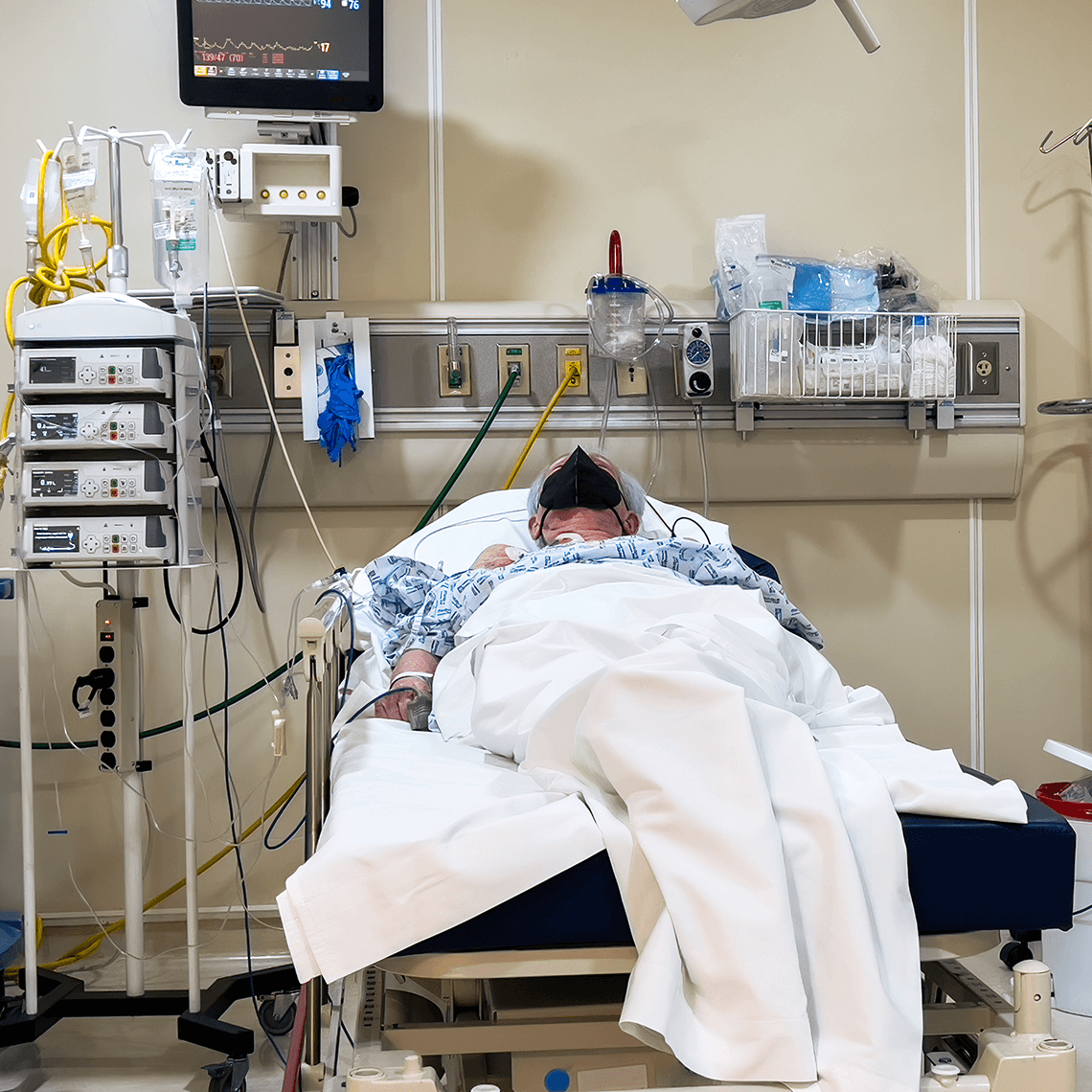
A sleepy-eyed resident physician finishing her notes after a string of 36-hour shifts; it may be an outdated image, after new work-hour limits went into effect this past July for US hospitals. Everyone hopes the new rules will lead to fewer mistakes and safer care for patients. But what are the downstream consequences? How can hospitals anticipate and manage new risks created by limiting resident work hours? Based on concerns about the impact of fatigue on human performance, the Accreditation Council for Graduate Medical Education, or ACGME, now requires the following for residents: a maximum of 24 consecutive work-hours, 10-hours rest between shifts, a limit of 80 hours per week, a minimum of one day out of seven away from the hospital, and on-call duty no more frequently than every third night.

“The intent of this is to improve both education and patient care, although we realize, in the acute phase, as hospitals get used to these requirements, both resident education and patient care may in fact be compromised.”

Dr. David Leach is the executive director of ACGME.

“I think hospitals are adapting. We’re seeing different patterns emerge in different places. Probably most challenged are the small surgical specialties that only have one or two residents in their program per year. One pattern that has emerged is that recent graduates of those programs take on a position, paid like a faculty member but acting like a resident. Other disciplines are using night-float systems, some of the larger surgical programs are doing that and that’s a new experience for them. Others are hiring physician assistants or nurse practitioners if they are available in their market.”

Most of the concern about reduced work hours focuses on increased risks from increased handoffs when residents sign their patients over to the next physician coming on shift. The other downside to limited hours is reduced education for physicians in training.

Dr. Sarah Bonkovsky is a third year resident at Beth Israel Deaconess Medical Center in Boston. Dr. Bonkovsky says she and her colleagues are concerned about the lost educational opportunities.

“You learn a lot as an intern because you’re here so much, because you’re immersed in it and you’re, you know, it used to be that we worked every day for two months with no day off. Which is on one hand very painful and tiring, but on the other hand it’s how you really learn how to take care of your patients well because you’re here every step of the day. You see them from admission to discharge, and you know how to deal with all the little details that come up. The other thing that you miss is that you’re asking more residents to work at night, and to have purely night-shift type of work because the other doctors are going home instead of sleeping in-house and being available if needed. So these doctors are now not here during the day which is when the bulk of the teaching occurs. So you’re adding on residents to rotations where they don’t get teaching.”

According to Dr. Bonkovsky, it has been difficult since July 1 for residents to get everything done before they have to leave. Completing admissions, seeing every patient, following up on lab tests, writing notes, and completing the sign out. She says she and many of her fellow residents are skeptical about the potential benefits of the new rules.

“I think that the prevailing opinion is that as medicine house staff at this hospital we didn’t feel that the restrictions are necessary. As interns here you can often work over 80 hours a week, as residents on more demanding rotations such as ICU you can easily work more than 80 hours. But it’s balanced out, once you’re a resident, by months that are easier. And so, with the institution of these across-the-board rules, it changes the way things have been working. It changes the way residents are trained and no one is convinced that there’s going to be any benefit to either quality of patient care or really resident satisfaction, at least at this point.”

At Stanford University, associate professor of anesthesia, Dr. Steven Howard is not surprised at the skepticism. Dr. Howard has long researched and written about the impact of fatigue on performance in health care. He said the literature on how fatigue degrades human performance in general is clear, however the direct scientific link between fatigue and medical error is somewhat sketchy.

“Fatigue does affect performance, although there are lots of people in health care and in medicine, and people within power still who don’t really want to believe that. And it affects things like memory, it affects our psychomotor movements, it affects our ability to retain information; useful information, like immediate recall and distant recall, it affects greatly our mood. One of the things that we’ve been truly unable to determine from our studies and from other studies within health care personnel is that… how does it truly affect our on line work? How does it truly affect my ability to be a doctor? Because those types of things, how to be a doctor, are difficult things to measure therefore, that’s one of the conundrums that we had with doing this type of research. We can prove that our psychomotor responses to various stimuli are worse when we’re fatigued, when we’re sleep-deprived, and we know our mood is impaired. But truly trying to determine and measure what happens to our abilities to be good doctors is somewhat more difficult to measure just by the nature of what does it mean to be a good doctor.”

In one of Dr. Howard’s studies in anesthesia, well-rested residents were compared with residents who were kept up for 25 hours. Then they delivered an anesthetic to a simulation patient for four hours. The study found subtle differences in performance. But a striking contrast was that videotapes showed the sleep-deprived subjects were nodding off during the procedure.

Dr. Howard says other high-risk industries like airlines, trucking, and nuclear power, have not waited for scientific studies proving cause and effect before instituting limits on work hours. He believes residents in particular have become inured to the effects because exhaustion has become the baseline for them. Dr. Howard certainly supports the new work limits for residents, but he says that the reduced work hours alone don’t solve the problems associated with sleep deprivation.

“What if residents go out and moonlight? What if the attendings are having to work more, so they’re the ones that are more fatigued, and as you age you become less resilient to the effects of fatigue, that’s also known. We’re not supposed to be up between two in the morning and six in the morning. Period. We don’t do well then. And that’s when we’re most vulnerable. And health care takes place 24 hours a day, seven days a week, and we have to come to grips with these things, circadian rhythms and things that are quite real, very well studied, very well documented. We know performance is poorer during certain times of the day and so we have to plan our practice around those things. We have to acknowledge that those things exist and we have to plan around them.

“So we have to come up with ways, while we are doing that… can we develop napping strategies? Can we develop different kinds of shifts, so that people are working nights for two weeks in a row and then switch back to days? There are other things within a fatigue management plan that we need to do to address the problem fully. And we can’t fool ourselves in thinking that just changing resident work hours is going to have any impact on safety.”

Dr. Howard points out that system engineers and human factors experts have long recognized that changes in complicated systems often lead to unanticipated new problems. He says that the experience in New York State, which instituted similar work-hour limits years ago, points to errors associated with increased handoffs. The solution was improved communications.

At Beth Israel Deaconess Medical Center in Boston, Dr. Mark Aronson is the vice chair for quality at the department of medicine.

“It’s something we work very hard for, for instance, what we have here is we have a computerized sign out, so that the residents don’t leave here without writing a very detailed sign out, that anyone who’s responsible for that patient could read. And it gives a very specific list of tasks to do over the next shift, so we make sure that doesn’t fall through the cracks.”

Dr. Aronson also says hospitalists are another solution for continuity of care. They can serve much the same function as residents now serve in training, but they can bill for their services and therefore don’t present the financial burden that just adding more residents does. He says his institution has taken measures to address the educational challenges of limited resident hours as well.

“We have full-time physicians within the department of medicine who spend one to three months a year on the medical service, where they actually do walk-rounds with the residents, in the morning, the work-rounds, so that they get a much closer chance to see how the residents are working. And to make sure there are no safety gaps… so instead of just the traditional teaching-rounds where the residents and attendings meet for an hour, hour and a half each day, we now have a core faculty member actually do work-rounds with them, four to five days a week to see patients with them directly at the bedside. So it sort of improves bedside teaching but also is a safety backup for patient care.” Dr. Leach of the ACGME says hospitals have their work cut out for them as they turn away from extreme resident work hours and patient safety systems that relied on tired residents to be hypervigilant.

“I think the most serious misstep that can be taken is to not approach it as a system issue. In other words, if you just try to patch together a schedule that meets our duty hour requirements, and are not attentive to other elements of the system, you get into trouble. You can do that, and you’ll meet our requirements, but the programs that have high morale with the residents are the ones that take extra good care of their patients. And the programs that we’ve seen that are exemplars have really had entire department, or even systemwide meetings to step up to this and make sure that the overall system is enhanced. That way patient care is safer, resident morale is better, and people continue to be proud about working in such a place.”